
3 signs your truck brake pads need replacing
Three signs that help drivers and mechanics tell when the brake pads on a tractor unit or semi-trailer need attention.
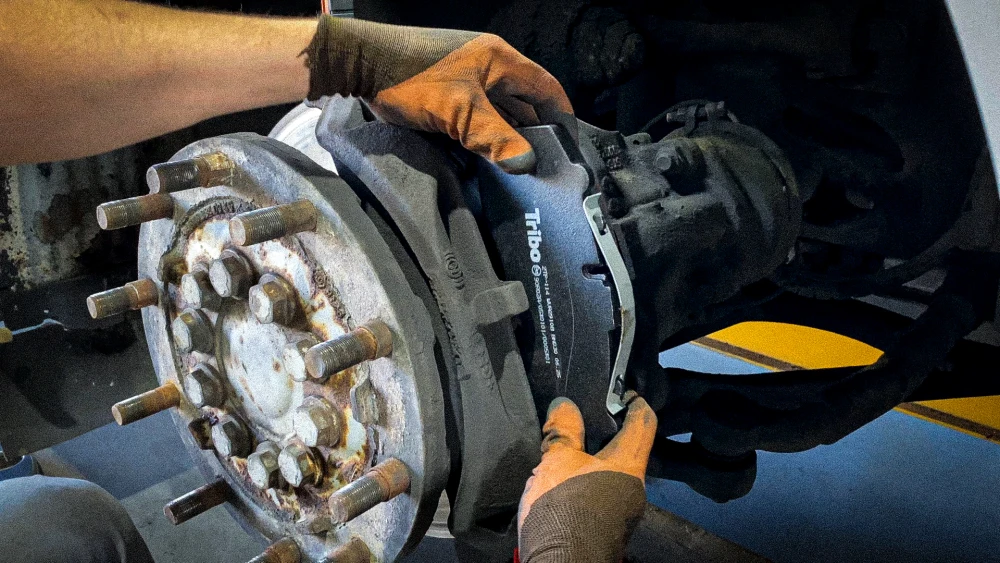
Why it matters
Brake pads are wear parts. How long they last depends on the trailer’s weight, the route, driving style and the condition of the entire braking system. Mileage alone is a poor guide. Check the actual condition of the pads and discs regularly.
Putting off replacement can mean damaged discs and calipers, vehicle downtime and, at worst, a dangerous situation on the road. Here are three warning signs to look for.
1. Little friction material left
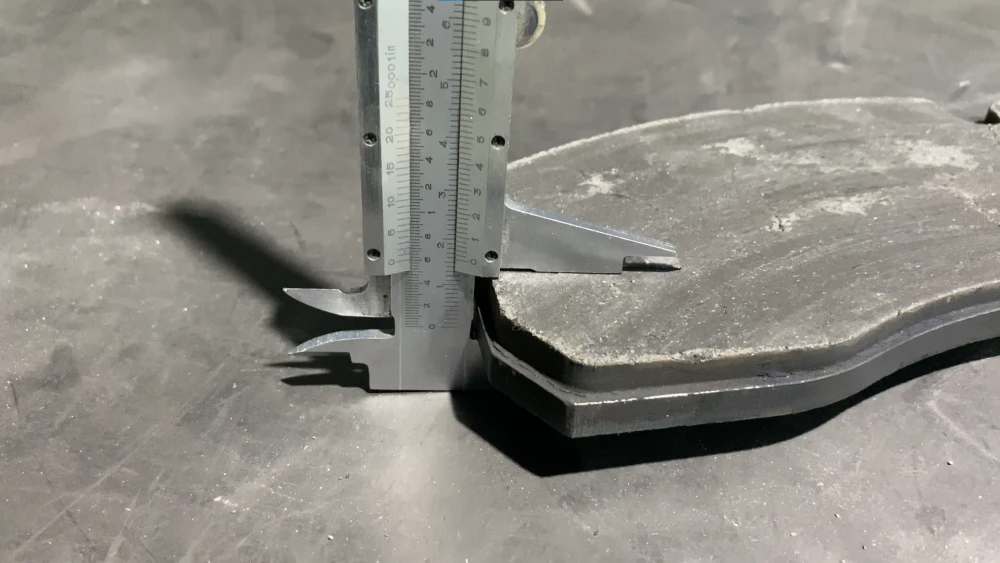
Start by checking the remaining thickness of the friction material. Compare it with the service limit specified for that brake system. Replace the pads when they reach that limit. Advanced wear brings several risks:
- Overheating. Worn brakes are more vulnerable to overheating under heavy use, which can reduce braking performance.
- Unpredictable braking. Poor pad-to-disc contact can reduce braking performance and increase stopping distance.
- Disc and caliper damage. If the friction material wears through, the steel backing plate can score the disc. Excessive travel of the caliper’s actuating components can also damage the assembly.
- Long descents. These problems are particularly serious when the vehicle is fully loaded and the brakes are already working hard.
How to check. Inspect the pads through the caliper inspection opening, where provided, or remove the wheel as directed in the service manual. Measure the remaining friction material with a vernier caliper or a dedicated wear gauge. Pay attention to the dashboard warning if the vehicle has wear sensors. Sensor coverage varies by system, so inspect all the pads visually as well.
2. Visible surface damage
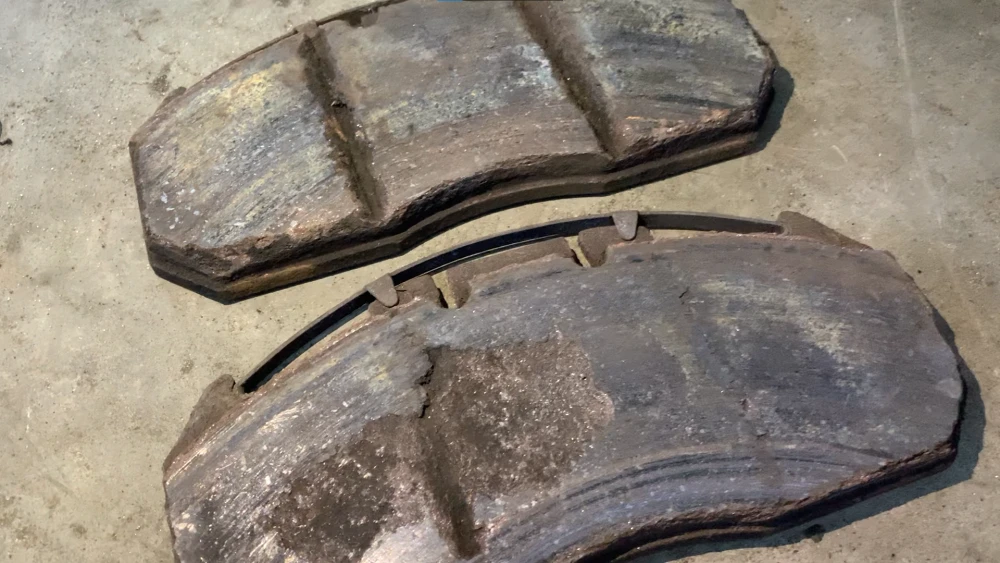
A pad may be unfit for service even when it has enough friction material left. Look out for:
- Glazing. The surface becomes smooth and shiny. Friction drops, making braking less effective and less predictable. Overheating is a common cause.
- Cracks. Heat and mechanical loads can cause cracks that grow over time.
- Chipping and crumbling. Loss of friction material reduces the contact area with the disc and can make braking uneven.
- Separation from the backing plate. If the friction material has started to separate, replace the pads immediately.
Assess the damage against the manufacturer’s criteria. If it exceeds the allowed limits, replace the pads even if there is plenty of friction material left.
3. Uneven pad wear across an axle
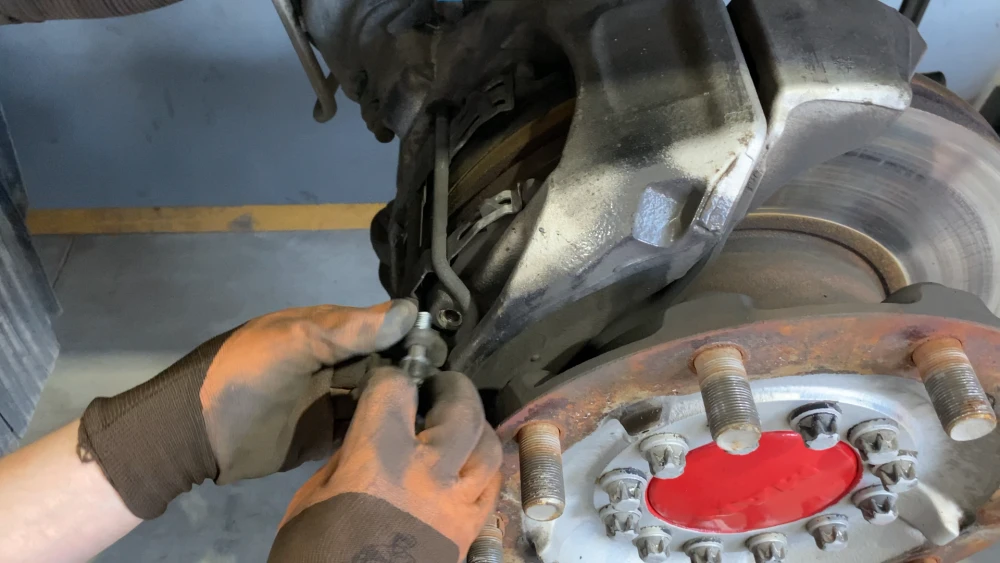
One pad may still have plenty of friction material while another on the same axle is nearly down to the backing plate. Replace the pads as a complete axle set. Uneven wear can be a sign of uneven braking force from side to side, which may make the vehicle pull to one side under braking.
Uneven wear often points to an underlying fault. Common causes include:
- seized caliper guide pins that prevent the caliper from sliding freely;
- a fault in the piston or brake adjuster mechanism;
- worn or damaged pad retaining hardware;
- an uneven or distorted brake disc.
Before fitting new pads, inspect the braking system. Check caliper slide movement and lubrication as specified by the manufacturer, the condition of the dust boots and retaining hardware, and the disc thickness, lateral runout and groove depth. If the fault remains, the new pads can wear unevenly too.
Practical tips
- Replace pads in complete axle sets. Changing pads on one side only can lead to uneven braking.
- Inspect the disc. Follow the manufacturer’s limits for minimum thickness, scoring and cracks when deciding whether the disc also needs replacement.
- Use the fitting kit. New springs, retainers and fasteners keep the pads correctly seated in the caliper.
- Bed in new pads. Follow the manufacturer’s bedding-in instructions. Brake smoothly during bedding-in and avoid unnecessary hard stops.
- Inspect on schedule. Check pads at every service and more often on demanding routes with frequent descents.
Takeaway
Look for friction material at its specified wear limit, visible surface damage and uneven wear across the axle. If you spot any of these signs, arrange a replacement promptly. Timely replacement helps protect the discs and calipers, reduces the risk of an accident and saves time and money.
Use our catalogue to find disc brake pads for your tractor unit, semi-trailer or bus.